


Post Category


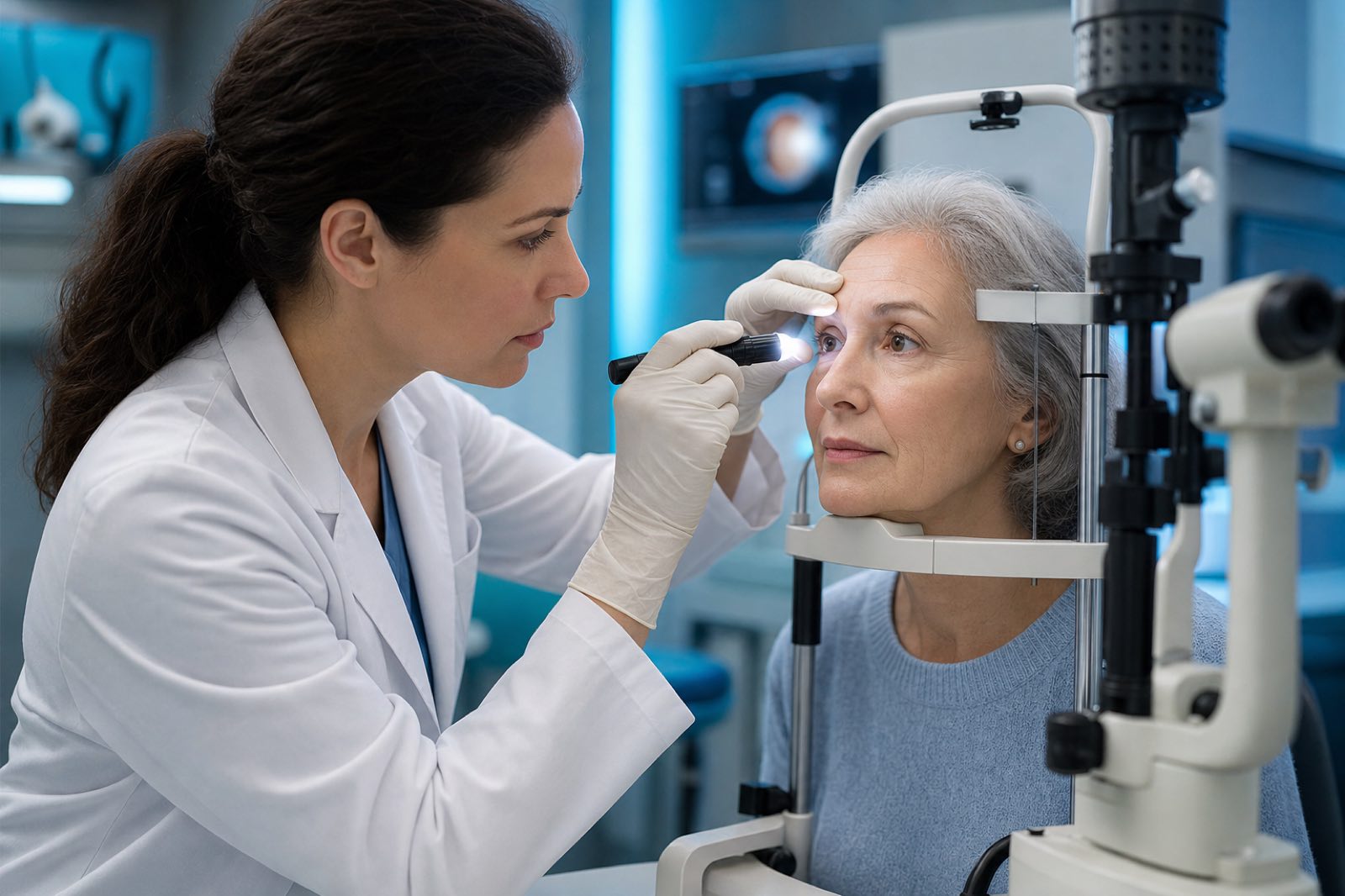
Two very different patients ask us about upper eyelid surgery at our Boca Raton office. The first does not like how tired and heavy the eyes look in photographs. The second has upper-lid skin resting on the lashes and has started tipping the chin up to read a road sign. The operation can look similar from the outside, but the path to it is not. One is elective and self-pay. The other may be a medically necessary repair of an obstructed visual field that your plan will consider covering. Knowing which describes you is the most useful thing you can do before a consultation.
What Is Blepharoplasty?
Blepharoplasty is the surgical removal of excess eyelid skin, and sometimes a small amount of fat or muscle, to restore a normal lid contour. The American Academy of Ophthalmology notes that eyelid skin is unusually thin and stretches over time, and that when the upper lid stretches too far, the excess skin can limit side vision. The clinical name for that excess skin is dermatochalasis.
Upper eyelid vs. lower eyelid procedures
Upper blepharoplasty addresses skin hanging over the lid crease and, in advanced cases, over the lashes and into the top of the visual field. Lower blepharoplasty addresses under-eye bags and is almost always cosmetic, because the lower lid does not obstruct vision. This article is about the upper lid.
Blepharoplasty vs. ptosis repair
These two operations are constantly confused, and they correct different problems. Blepharoplasty removes skin: the lid margin sits normally, but redundant skin drapes over it. Repair of a drooping lid margin tightens or advances the levator muscle when the margin itself has fallen toward the pupil. Plenty of patients over 65 have both. Separating them on exam matters, because removing skin alone in a patient with true ptosis leaves the eye still looking and functioning droopy.
Cosmetic vs. Functional Blepharoplasty
When it is cosmetic (self-pay)
If your superior visual field is unobstructed and your motivation is appearance, the procedure is cosmetic and self-pay. That is a legitimate reason to have surgery, and it is the version insurers do not cover.
When it is functional (insurance-eligible)
Surgery is functional when redundant upper-lid skin, a low lid margin, or both measurably block the top of your visual field. The complaints we hear: losing the top line of a monitor, missing overhead traffic signals, an aching brow, lids that feel heavy by late afternoon. The visual burden is measurable beyond the visual field alone; published work on dermatochalasis has also documented changes in contrast sensitivity. Functional cases may be eligible for coverage, which is not the same thing as being covered.
What Medicare and most Florida carriers look for
Florida Medicare Part B claims are administered by First Coast Service Options, and the governing policy is the Local Coverage Determination titled Blepharoplasty, Blepharoptosis Repair and Surgical Procedures of the Brow (L34028). Commercial plans write their own criteria, and most borrow the same signals:
- A documented superior visual-field defect, commonly described as roughly 30 percent obstruction of the superior field.
- A margin reflex distance (MRD1) of about 2 mm or less, measured from the center of the pupil to the upper lid margin.
- Meaningful improvement between taped and untaped visual fields, showing the deficit comes from the lid and not from something inside the eye.
- External photographs in primary gaze paired with a documented functional complaint.
We do not promise coverage, and no honest practice can. Your carrier adjudicates the claim against its own policy after the testing is submitted. What we can do is measure you properly, document what is present, and tell you plainly which side of the line you fall on.
Signs You May Be a Candidate
- Dermatochalasis: excess upper-lid skin folding over the crease or touching the lashes, sometimes to the point that you lift it with a finger to see.
- Ptosis: a lid margin sitting low over the pupil, often asymmetric, sometimes worse late in the day or after decades of contact-lens wear.
- Brow ache: deep forehead lines and a dull ache from constantly recruiting the frontalis muscle to hold the lids up.
- Functional workarounds: tipping the head back to read, driving with the chin elevated, propping the brow with a hand.
The Boca Raton and South Florida Context
Palm Beach County gives eyelid skin an unusually hard life. Decades of ultraviolet exposure degrade elastin and collagen in the thinnest skin on the body, and the laxity that follows arrives earlier than it would in a northern climate. Between outdoor tennis, golf, and boating, it is not unusual to see functional lid obstruction in patients in their late 50s. Year-round sun matters after surgery too: a fresh lid-crease incision is vulnerable to hyperpigmentation, so plan on wrap-style sunglasses and shade for the first several weeks.
What to Expect at Your Consultation
A functional evaluation is a specific set of measurements, not an opinion. Beyond the taped and untaped visual fields, MRD1, and photographs described above, expect two things patients rarely anticipate:
- A tear-film and corneal assessment, because blepharoplasty can transiently worsen dry eye and we want a baseline before we change lid mechanics.
- Brow position. If the brow itself has descended, removing lid skin alone will not solve the problem and can leave the brow sitting lower than it started.
Candidacy for any eyelid procedure requires a comprehensive in-person evaluation with a board-certified ophthalmologist.
The Procedure Itself
Upper blepharoplasty is an outpatient procedure, usually performed under local anesthesia with light sedation rather than general anesthesia, and you go home the same day. Plan on roughly 30 to 60 minutes of operating time for both upper lids. The incision sits inside the natural upper-lid crease so the mature scar hides in the fold when the eye is open. Excess skin is marked with you sitting upright, removed conservatively, and closed with fine sutures that come out around one week. If a drooping lid margin is addressed at the same time, that same incision reaches the levator muscle.
Recovery Timeline
Week 1. Swelling and bruising peak around day two or three. Ice for the first 48 hours, sleep with the head elevated, avoid bending and lifting, and use ointment along the incision as directed. Sutures typically come out at five to seven days.
Weeks 2 to 4. Most patients are back at desk work within a week to ten days and comfortable in public by two to three weeks as bruising fades. Light activity usually resumes around two weeks, with strenuous exercise and swimming later, on your surgeon's timeline.
Months 2 to 6. Firmness in the incision softens, the scar fades from pink to pale, and the contour settles. Judging your result at three weeks is really judging swelling. Six months is the honest assessment point.
Risks and Realistic Expectations
Blepharoplasty is common and generally well tolerated, but it is surgery on the eyelid: bleeding and bruising, infection, dry eye, incomplete lid closure (lagophthalmos), asymmetry, visible or thickened scarring, undercorrection or overcorrection, and, rarely, vision-threatening bleeding behind the eye. Asymmetry deserves emphasis, because most faces are asymmetric before surgery and remain so after it. A functional blepharoplasty restores an obstructed superior visual field; it does not deliver a specific cosmetic result, and no surgeon can guarantee an outcome.
What Does Blepharoplasty Cost in Boca Raton in 2026?
Cosmetic, self-pay. A cosmetic quote should be itemized into surgeon's fee, facility fee, and anesthesia. Quotes vary widely with the complexity of the case, so get yours in writing after an examination. A number quoted over the phone before anyone has measured your lids is a guess.
Functional, insurance-eligible. If your testing meets your carrier's criteria and the claim is approved, the surgery is billed as a covered service and you owe the usual cost-sharing: deductible, coinsurance, and any facility and anesthesia cost-sharing. Approval is decided by your plan, not our office, and any cosmetic refinement added onto a functional repair is billed separately as self-pay.
Blepharoplasty vs. Ptosis Repair vs. Brow Lift
- Blepharoplasty removes redundant upper-lid skin: right when the margin is well positioned but the skin has descended.
- Ptosis repair raises the lid margin itself: right when MRD1 is reduced and the margin covers part of the pupil.
- Brow lift elevates a descended eyebrow: right when the brow has fallen below the orbital rim and removing lid skin alone would pull it lower still.
These are frequently combined. Choosing the wrong one produces a technically successful operation and an unhappy patient.
When to See an Ophthalmologist About Your Eyelids in Boca Raton
Be evaluated promptly if a droop came on suddenly or over days rather than years, or if it arrives with double vision, a pupil that looks different in size, headache, or drooping that fluctuates through the day. Those patterns can point to neurologic or neuromuscular causes rather than ordinary aging, and they are worked up more urgently. A new, firm, bleeding, or ulcerated lid lesion also needs examination rather than reassurance; if you have been wondering about a growth, start with our guidance on eyelid skin tags and lesions.
Important Safety Information
This article is general education, not medical advice, and not a coverage determination. Blepharoplasty and ptosis repair carry risks including bleeding, infection, dry eye, incomplete eyelid closure, corneal exposure, asymmetry, scarring, undercorrection, overcorrection, revision surgery, and, rarely, orbital hemorrhage with vision loss. Whether skin removal, levator surgery, brow elevation, or a combination is appropriate can only be determined by a comprehensive in-person examination with a board-certified ophthalmologist. Insurance eligibility is decided by your carrier based on its own criteria and your submitted testing; nothing here is a promise of coverage or outcome. If you develop sudden vision loss, severe eye pain, a rapidly swelling or tense lid, or double vision after eyelid surgery, seek care immediately.
Frequently Asked Questions
Will insurance cover my upper eyelid surgery?
Only if it is functional and your documentation meets your carrier's criteria. Most plans, including Medicare in Florida, look for a measurable superior visual-field defect, a low margin reflex distance, and improvement on taped versus untaped fields. We measure and submit; your carrier decides. Cosmetic surgery is not covered.
What is the difference between blepharoplasty and ptosis repair?
Blepharoplasty removes excess upper-lid skin while the lid margin sits normally. Ptosis repair raises a margin that has dropped toward the pupil, usually by advancing the levator muscle. Many older patients need both, and lid measurements are what tell them apart.
How long is recovery after upper eyelid surgery?
Bruising and swelling peak at two to three days and largely resolve over two to three weeks. Sutures come out at five to seven days and most people return to desk work within a week to ten days. Judge the final appearance at about six months.
Is upper eyelid blepharoplasty painful?
Most patients describe pressure and tightness rather than pain, usually managed with cold compresses and over-the-counter analgesics. Report severe or escalating pain, especially with swelling or vision change, to your surgeon immediately.
Will blepharoplasty make my dry eye worse?
It can, at least temporarily, because removing skin changes lid mechanics and blink dynamics. Patients with marginal tear function notice it most, which is why we assess the tear film first and plan skin removal conservatively.
Can I have upper and lower eyelid surgery at the same time?
Frequently, yes, though they serve different purposes. Upper surgery may be functional; lower surgery is essentially always cosmetic and self-pay. Combining them means the cosmetic portion is billed separately and bruising runs slightly longer.
How long do the results of upper blepharoplasty last?
The skin removed does not come back, and most patients are satisfied for many years. Tissues keep aging and brows keep descending, so some eventually consider a revision or brow procedure. Sun protection is the most controllable variable.
Schedule an Eyelid Evaluation in Boca Raton
West Boca Eye Center serves patients from Boca Raton, Delray Beach, Boynton Beach, Deerfield Beach, Parkland, and Coral Springs. If your upper lids are blocking the top of your vision, the answer starts with measurements. Learn more about eyelid surgery in Boca Raton and our upper-lid skin removal procedure, read about Dr. Brent Bellotte, or call to schedule an eyelid evaluation. Additional patient guidance is available from the American Society of Ophthalmic Plastic and Reconstructive Surgery.
Sagging upper eyelids can affect vision and appearance. A Boca Raton guide to blepharoplasty, ptosis repair, insurance criteria, and recovery.
Book an appointment
Fill out the form below and our staff will reach out to you quickly to fully book your appointment and receive all of your necessary information.

Specializing in modern cataract surgery.
Located 1/2 miles North of West Boca Medical Center on Glades Road, directly behind Macy's Furniture Gallery.
West Boca Eye Center
9325 Glades Road, Suite 201.
Boca Raton, FL 33434