


Post Category


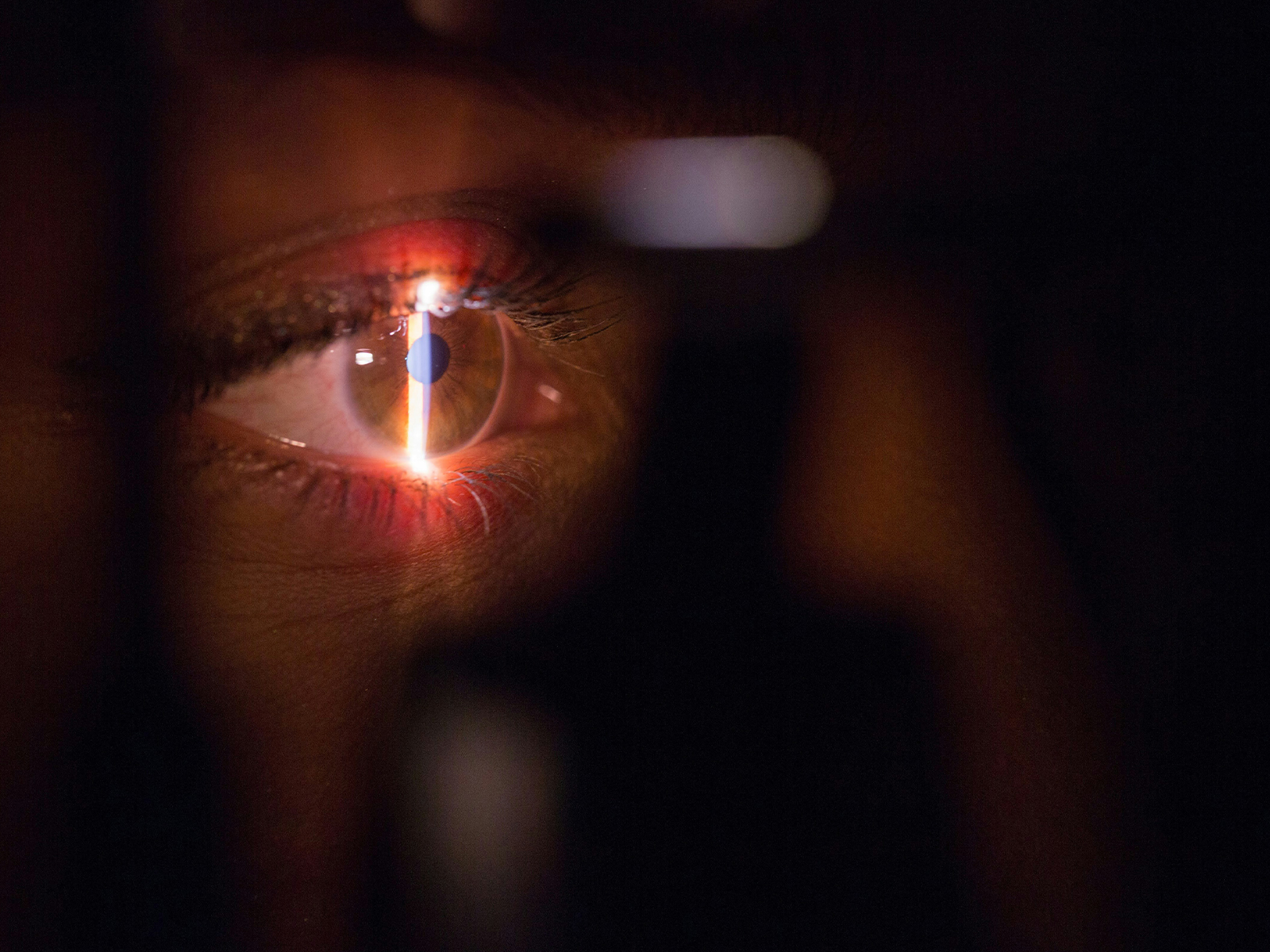
When you start comparing PRK vs LASIK, it helps to know that both procedures correct vision the same way: by using an excimer laser to reshape the cornea so that light focuses properly on the retina. The end goal is identical, and so is the final visual outcome for most patients. The difference is in how the surgeon reaches the corneal tissue, and that single difference changes everything about candidacy and the first week of recovery. LASIK works under a thin corneal flap. PRK works on the surface, with no flap at all. For Boca Raton patients with thin corneas, contact-sport athletes, and the military and first responders who serve Palm Beach County, that flap-versus-no-flap distinction is often the entire decision.
This guide walks through how each procedure works, who is a better candidate for each, how the recovery genuinely differs week by week, and where the two converge over the long term. It is an ophthalmologist's side-by-side, written for an educated patient. It is not a substitute for a comprehensive evaluation.
How LASIK works
LASIK (laser-assisted in situ keratomileusis) is a two-step corneal procedure. First, your surgeon creates a thin, hinged flap in the front layers of the cornea, almost always with a femtosecond laser. The flap is gently lifted to expose the underlying corneal stroma. Second, an excimer laser reshapes that stroma according to your prescription, flattening the central cornea for myopia, steepening it for hyperopia, and smoothing it for astigmatism. The flap is then laid back into position, where it adheres without stitches and seals as a natural bandage.
According to the American Academy of Ophthalmology, LASIK is one of the most studied elective procedures in medicine. Because the flap acts as its own protective covering, the surface heals quickly and most patients see clearly within a day. The trade-off is that the flap is a permanent structural feature of the cornea, and creating it requires sufficient corneal thickness.
How PRK works
PRK (photorefractive keratectomy) was the original laser vision correction procedure, predating LASIK, and it remains the standard surface-ablation technique. PRK does not create a flap. Instead, the surgeon removes the thin outer layer of the cornea, the epithelium, to expose the surface directly. The same excimer laser then reshapes the cornea exactly as it would in LASIK. The difference is that, with no flap, the laser is applied right at the surface.
Because the epithelium was removed rather than lifted as a flap, it has to grow back. The surgeon places a soft bandage contact lens over the eye to protect it while the epithelium regenerates over the first several days. As the American Academy of Ophthalmology notes, the laser reshaping in PRK is the same as in LASIK; what differs is the surface healing. That healing window is the source of PRK's longer and more uncomfortable early recovery, and also the source of its advantages for specific patients.
PRK vs LASIK at a glance
Here is how the two procedures compare across the factors that drive the decision.
- Mechanism. LASIK reshapes the cornea under a femtosecond-laser flap. PRK reshapes the same corneal tissue at the surface after removing the epithelium, with no flap.
- Corneal thickness required. LASIK requires enough thickness to safely create a flap and leave a stable residual bed. PRK preserves more underlying tissue because no flap is cut, making it the preferred laser option for thinner corneas.
- Early recovery. LASIK is comfortable within a day, with functional vision usually the next morning. PRK involves several days of irritation, light sensitivity, and blurry vision while the epithelium heals, with clear vision developing over weeks.
- Long-term outcomes. Published data shows the two procedures reach comparable visual outcomes by around three months. Neither is superior in final clarity for a well-chosen candidate.
- Dry eye risk. LASIK transects more corneal nerves when the flap is created, so it carries a somewhat higher transient dry eye risk. PRK affects fewer deep nerves, which can make it gentler for patients with borderline dry eye.
- Activity and impact risk. LASIK leaves a flap that, while very stable, can theoretically be displaced by a severe direct blow to the eye. PRK has no flap, so there is nothing to dislodge, which matters for combat sports and high-impact occupations.
- Cost. In South Florida, both procedures fall in a broadly similar elective price range, often roughly $2,000 to $3,000 per eye depending on the technology platform. Refractive surgery is generally not covered by medical insurance.
Who is a better candidate for LASIK
LASIK tends to be the more straightforward option when the eye supports it. A good LASIK candidate at WBEC often looks like:
- A healthy adult with a stable prescription for at least 12 months.
- Adequate corneal thickness and a normal corneal topography.
- Moderate myopia, hyperopia, or astigmatism within approved ranges.
- No significant ocular surface disease or severe dry eye.
- A lifestyle and occupation without a high risk of direct, forceful eye trauma.
- A strong preference for the fastest possible visual recovery.
For patients who qualify, LASIK delivers next-day functional vision and minimal discomfort, which is why it remains the most common laser vision correction procedure performed.
Who is a better candidate for PRK
PRK is the right answer more often than many patients expect. A good PRK candidate at WBEC often looks like:
- A patient with corneas too thin for a safe LASIK flap.
- A patient with a corneal surface irregularity, a flat or steep cornea, or borderline topography that makes a flap riskier.
- An athlete in contact or combat sports, or a patient in an occupation with high eye-trauma risk.
- A patient with mild-to-moderate dry eye who is flap-shy.
- A patient with certain corneal scars or epithelial conditions, where a surface procedure is preferred.
- A patient who is simply not comfortable with the idea of a permanent corneal flap.
"In our Boca Raton practice, when a patient has a thin cornea, a borderline topography, or an active, contact-heavy lifestyle, PRK is frequently the safer long-term choice even though the first week asks more of the patient. The eye comes out structurally sound, with no flap to ever worry about." (Brent Bellotte, MD)
PRK for military and first responders
This is one of the clearest real-world distinctions between the two procedures. Because PRK leaves no corneal flap, it has historically been the preferred and, in some roles, the required refractive procedure for military special operations, aviation, and other high-impact assignments. The concern is straightforward: in a high-G, high-impact, or hand-to-hand environment, a flap is a structure that could theoretically be disturbed, while a PRK-treated cornea has no such feature. Branch and role requirements vary and change over time, so any service member or applicant should confirm current standards with their command or recruiter before scheduling surgery.
Palm Beach County is home to a large population of active and retired military, law enforcement officers, firefighters, and paramedics. For these patients, the no-flap durability of PRK is often worth the longer recovery, and we counsel them through that trade-off directly.
PRK vs LASIK for athletes
The right procedure for an athlete depends on the sport. For contact and combat athletes, boxers, mixed martial artists, wrestlers, and anyone exposed to repeated blows to the head and face, PRK's lack of a flap removes the small but real concern of flap displacement from a direct hit. For athletes in non-contact sports who simply want the fastest return to training, LASIK's next-day recovery may be more appealing, provided their corneas qualify. Boca Raton and the surrounding area, including the athletic community around Florida Atlantic University, give us a steady stream of these conversations, and the answer is always individualized to the sport and the cornea.
Recovery week by week
This is where the two procedures genuinely diverge, and it is the part patients most need to understand before choosing.
LASIK recovery:
- Day 1. Mild scratchiness for a few hours, then rapid improvement. Most patients see well enough to function the next morning.
- Week 1. Vision is largely functional. Some glare, halos, and dryness are common and improving.
- Weeks 2 to 4. Vision continues to sharpen and stabilize. Most restrictions lift.
PRK recovery:
- Days 1 to 4. This is the demanding window. Expect irritation, a gritty or burning sensation, light sensitivity, tearing, and blurry vision while the epithelium regrows under the bandage contact lens. Discomfort is managed with prescribed drops and oral pain relief.
- Day 4 to 7. The bandage contact lens is typically removed once the epithelium has healed. Comfort improves substantially, but vision is still hazy.
- Weeks 2 to 4. Vision clears steadily. Many patients are driving and back to most activities, though vision is not yet at its final sharpness.
- Months 1 to 3. Vision continues to refine toward its final result, often reaching a clarity comparable to LASIK by around the three-month mark.
The honest summary: LASIK is easier early, PRK asks more of you for the first week, and they finish in roughly the same place. That single fact decides most cases. A patient who cannot afford a slow week may lean LASIK if the cornea allows; a patient whose cornea or lifestyle favors PRK accepts the harder week for the structural advantage.
Long-term outcomes: where they converge
By around three months, the visual results of PRK and LASIK in well-selected patients are comparable. Long-term outcome literature, summarized by professional societies including the Refractive Surgery Council and discussed in peer-reviewed refractive surgery research, supports both procedures as safe and effective for appropriately screened candidates, with high patient-satisfaction rates. Neither procedure is categorically "better." The better procedure is the one that matches your cornea, your prescription, your dry eye status, and your lifestyle.
If a comprehensive evaluation shows that neither laser procedure is ideal, for example because of a very high prescription or a cornea that cannot safely support surface or flap-based treatment, other options exist. The EVO ICL is an implantable lens alternative often used for high myopia and thin corneas, and refractive lens exchange in Boca Raton may be appropriate for patients approaching presbyopia. A thorough consultation clarifies which path fits.
How to decide between PRK and LASIK
Use this sequence during your consultation:
- Confirm prescription stability. A prescription that has shifted more than 0.50 D in the past year is not ready for either procedure.
- Review corneal thickness and topography. These measurements, not your glasses prescription alone, drive the flap-versus-surface decision.
- Assess your dry eye status with tear-film and gland evaluation.
- Be honest about your lifestyle and occupation, especially contact sports, military or first-responder roles, and high-impact work.
- Weigh how much the first week of recovery matters to your schedule.
- Confirm candidacy with your surgeon based on the full evaluation, not on marketing.
You can read more about each procedure on our LASIK service page and our PRK service page. Candidacy for any refractive procedure requires a comprehensive evaluation with a board-certified ophthalmologist.
Frequently Asked Questions
Is PRK or LASIK better?
Neither is categorically better. They reshape the cornea the same way and reach comparable visual outcomes by about three months. LASIK has an easier early recovery; PRK has no corneal flap, which makes it preferable for thin corneas, contact athletes, and certain high-impact occupations. The right choice depends on your individual eye and lifestyle.
Why does PRK take longer to recover from?
In PRK, the outer corneal layer (the epithelium) is removed and must regrow over several days. During that healing window, patients experience irritation, light sensitivity, and blurry vision. LASIK uses a flap that acts as a natural bandage, so the surface heals much faster. PRK vision typically catches up to LASIK by around three months.
Is PRK safer than LASIK for thin corneas?
For patients with corneas too thin to safely support a LASIK flap, PRK is often the safer laser option because it does not require cutting a flap and preserves more underlying corneal tissue. Your surgeon determines this from your corneal thickness and topography measurements.
Why do the military and first responders often choose PRK?
Because PRK leaves no corneal flap, there is no flap that could theoretically be disturbed during high-impact, high-G, or hand-to-hand situations. This durability has made PRK the preferred or required procedure for many military and high-impact roles. Requirements vary by branch and role, so confirm current standards before scheduling.
Does PRK hurt more than LASIK?
The early recovery is more uncomfortable. For the first several days after PRK, patients commonly have a gritty, burning sensation, light sensitivity, and tearing while the epithelium heals. This is managed with prescribed drops and oral pain relief and resolves as the surface regenerates.
Can I have PRK if I have dry eye?
Often, yes. PRK affects fewer deep corneal nerves than LASIK, so it can be gentler for patients with mild-to-moderate dry eye who are concerned about a flap. A comprehensive dry eye evaluation is part of determining candidacy for either procedure.
Can PRK and LASIK be performed during pregnancy?
No. Neither procedure is performed during pregnancy or nursing, because hormonal changes can shift your refraction and affect healing. Surgery is deferred until your prescription is stable after this period.
How long until I can drive after PRK?
Many patients are able to drive within one to two weeks after PRK, once the bandage contact lens is removed and vision has cleared enough to meet legal standards. This is slower than LASIK, where many patients drive the next day. Your surgeon will tell you when it is safe based on your healing.
Important Safety Information
PRK and LASIK are not appropriate for every patient. Contraindications include but are not limited to: pregnancy or nursing, age under 18, an unstable refraction, insufficient corneal thickness (for LASIK), significant ocular disease such as untreated glaucoma, active corneal infection, severe dry eye, or corneal ectasia, certain systemic autoimmune conditions, and inadequate healing capacity. Risks of laser vision correction include dry eye, glare and halos (especially at night), undercorrection or overcorrection that may require an enhancement, infection, delayed epithelial healing or corneal haze (more associated with PRK), flap complications (specific to LASIK), and, rarely, loss of best-corrected vision. For risk information, see the FDA LASIK consumer page. Candidacy for any refractive procedure requires a comprehensive evaluation with a board-certified ophthalmologist.
Ready to find out which procedure fits your eyes?
West Boca Eye Center serves patients from Boca Raton, Delray Beach, Boynton Beach, Deerfield Beach, Parkland, and Coral Springs. We perform both PRK and LASIK and recommend based on your cornea and your life, not on a single procedure. To schedule a refractive consultation with Dr. Brent Bellotte, visit our surgeon bio page or our Boca Raton location page.
PRK and LASIK both reshape the cornea to correct vision, but recovery and candidacy differ. A Boca Raton guide for thin corneas, athletes, and military patients.
Book an appointment
Fill out the form below and our staff will reach out to you quickly to fully book your appointment and receive all of your necessary information.

Specializing in modern cataract surgery.
Located 1/2 miles North of West Boca Medical Center on Glades Road, directly behind Macy's Furniture Gallery.
West Boca Eye Center
9325 Glades Road, Suite 201.
Boca Raton, FL 33434