


Post Category


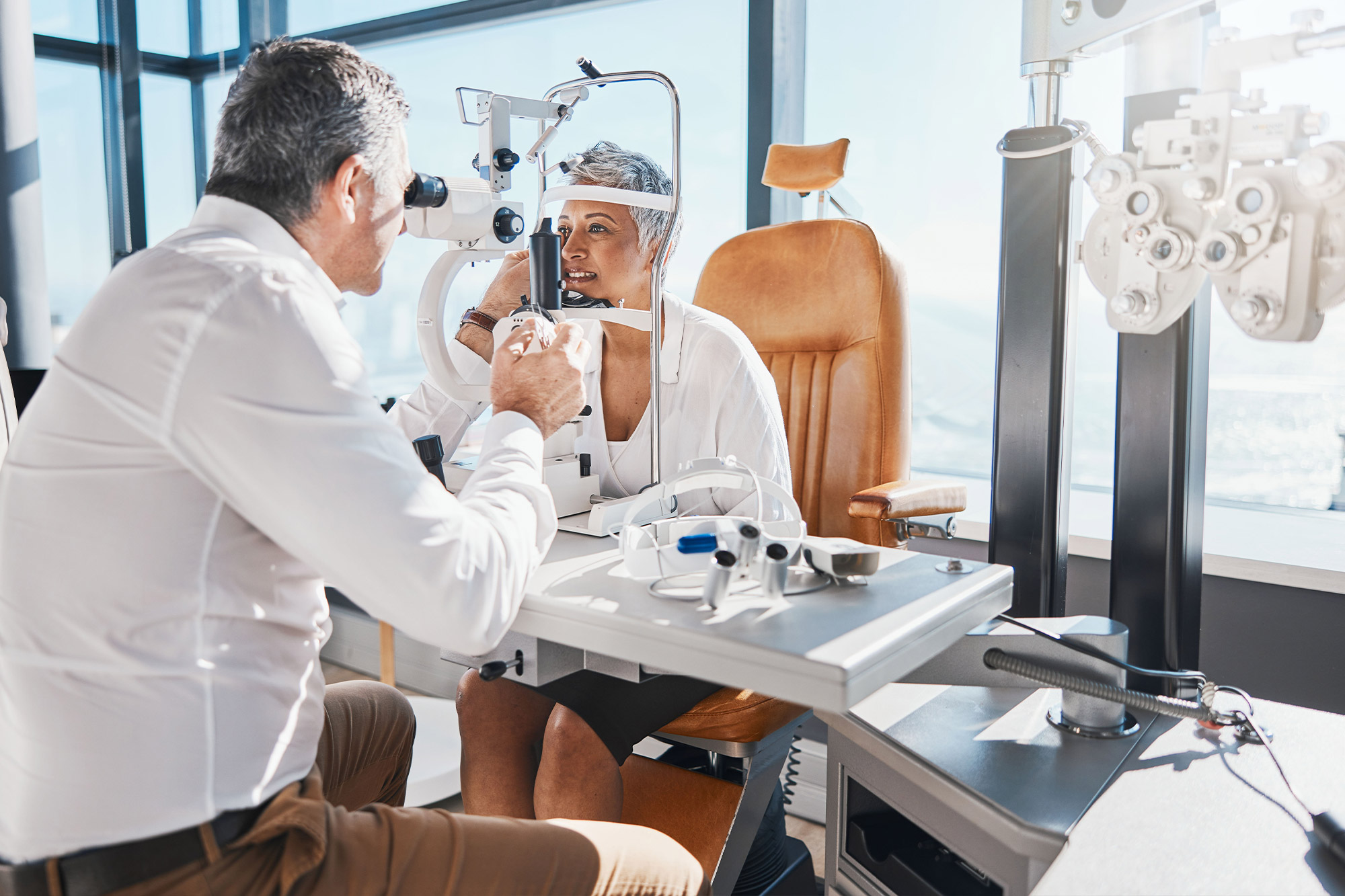
Wondering what the difference is between an ophthalmologist and an optometrist? You’re certainly not alone. While they both go under the broad term of “eye doctor”, they are distinctly different medical professionals with their own specialties.
A basic overview of ophthalmologist vs. optometrist is this:
- An ophthalmologist is a medical doctor who has completed extensive medical training and specializes in all areas of advanced eye health, including surgery, such as LASIK and cataract removal. They diagnose and treat all eye diseases, as well as provide general overall visual care. Training takes anything from 12 years+.
- An optometrist completes 8 years of training (4 years college, 4 years optometry school). They perform eye tests, prescribe corrective lenses, and treat many different kinds of eye conditions.
While both provide primary eye care, all types of complex condition diagnosis, treatment, and surgery require the expertise of an ophthalmologist.
When Do I Need to See an Ophthalmologist?
Ah, the million-dollar question…
The short answer is that anything to do with day-to-day vision, routine eye tests, or simple visual issues can be seen by an optometrist. However, knowing what might be considered “simple” isn’t necessarily that straightforward.
So, let’s consider it in another way—by using examples of real-world scenarios. We’ll look at some common concerns, as well as rarer conditions and those with the potential to cause serious issues. In addition, we’ll consider some co-existing medical conditions that could, potentially, cause even simple eye issues to be more serious.
My eye is red, itchy, and crusty in the morning. I’ve tried over-the-counter (OTC) eye drops, and they haven’t helped. Who should I see?
In this scenario, the first port of call would be an optometrist. They can diagnose simple eye infections, like mild conjunctivitis (which this probably is), advise on care, and prescribe any necessary eye drops or medication.
I work on computers a lot. At the end of the day, my eyes feel heavy, tired, and sometimes my vision is a bit blurry. Who should I see?
An optometrist will be able to carry out an eye examination and eye-strain test, as well as prescribing the right corrective lens and giving advice on good screen use health for your eyes.
I’m normally fit and well, except for my high blood pressure. My vision has gone a bit funny, and I’ve got a mild headache. I’m sure it’s not serious. Who should I see?
Any sudden vision changes in conjunction with hypertension should be urgently seen by an ophthalmologist or, failing that, go straight to the emergency department.
My son has been hit in the eye with a baseball. There’s blood in the front of his eye, and he says his sight “isn’t right”. Who should I see?
This would require either an emergency visit to an ophthalmologist or, if there’s not one available, the nearest ED.
I’m suddenly seeing flashes of light in one eye, and it looks like there’s a shadow coming down from the top. Who should I see?
This has all the hallmarks of a detached (or detaching) retina, which is a potentially sight-threatening condition. See an ophthalmologist straight away or go to the nearest ED.
My eyeglasses don’t seem to work as well as they used to. Who should I see?
Make an appointment with an optometrist for an eye test. They can assess and alter your prescription if necessary. Or, if you’d like to consider LASIK—a type of laser vision correction—they can refer you to an ophthalmologist.
I’ve woken up with a red eye, intense headache, deteriorating foggy vision, and I feel a bit sick. Who should I see?
These are classic symptoms of a serious glaucoma emergency. You need to see an ophthalmologist urgently or go immediately to the closest ED.
I’m due my annual diabetic eye scan. I’ve had no issues over the last year, and everything is stable. Who should I see?
An optometrist can carry out a dilated eye exam and other necessary tests. Should anything show up, they can refer you to an ophthalmologist.
I’m also diabetic. My vision has gone a bit blurry in one eye, but I think it might be my hay fever—although my normal antihistamines haven’t helped. Who should I see?
Straight to an ophthalmologist with you, as changes in the vision of one eye can be symptoms of worsening diabetic eye disease. Again, if there’s not one available, head to the ED.
My vision has been gradually worsening, and now I have to put my cell phone at arm’s length to read it. I know I’m getting older, but I don’t think this is normal. Who should I see?
Book an appointment with an optometrist, who can carry out a vision examination and test you for presbyopia, a common refractive condition that affects people over the age of 40. They can prescribe corrective eyeglasses or contacts to help you see clearly again.
Grandma’s cataracts are getting worse. She nearly tripped over the cat today and says she can barely see to knit or do her sudoku unless all the lights are on. Who should I take her to see?
Sounds like she’s ready for cataract removal, so she needs to see an ophthalmologist who can assess, prepare, and schedule her in surgery.
Hopefully, these scenarios start to make it a bit clearer about what each eye doctor can treat. However, rather than getting too hung up on knowing what an ophthalmologist does treat or what an optometrist doesn’t, having a short self-assessment list of what will require more advanced care will give you all the information you need to make a choice.
In short, see an ophthalmologist (or go to the ED) if you have:
- Eye trauma or bleeding, with or without vision changes
- Any sudden, partial, or total vision loss, either in one or both eyes
- The sudden appearance of flashes or floaters, with or without any other vision changes (such as a dark curtain coming down from the top of your vision)
- A foreign body in the eye that won’t flush out with warm water
- Chemical splashes in the eye
- Severe eye pain, especially if it isn’t relieved by OTC medication
Conversely, most routine eye care can be seen by an optometrist. This includes prescription changes, minor eye ailments, stable diabetic eye checks, and early cataract monitoring.
If you are in any doubt, call the eye doctor’s office. They will ask you a few questions and advise which specialist you need to see, taking the guesswork away from the “Should I see an ophthalmologist or optometrist” quandary.
The Relationship Between Ophthalmologists and Optometrists
In practice, many clinics employ both types of eye doctors. They work in harmony with each other, with many highly skilled optometrists furthering their training to deliver excellent pre- and post-operative cataract care, advising on laser eye surgery, and prescribing and fitting specialty contact lenses.
At the West Boca Eye Center, Dr. Brent Bellotte leads a world-class team consisting of both types of eye doctors. This allows seamless patient care in a single location. From regular eye exams to pediatric cataract care, glaucoma surgery to LASIK, the latest intraocular lenses, and everything in between, when it comes to choosing an eye doctor in Boca Raton, the WBEC has got you covered.
For surgical eye care, disease management, or a second opinion in Boca Raton, Dr. Bellotte and the WBEC team are ready to help.
A practical guide to choosing between an ophthalmologist and optometrist, with real-world scenarios covering routine care, urgent symptoms, and when to go to the ED.
Book an appointment
Fill out the form below and our staff will reach out to you quickly to fully book your appointment and receive all of your necessary information.

Specializing in modern cataract surgery.
Located 1/2 miles North of West Boca Medical Center on Glades Road, directly behind Macy's Furniture Gallery.
West Boca Eye Center
9325 Glades Road, Suite 201.
Boca Raton, FL 33434