


Post Category


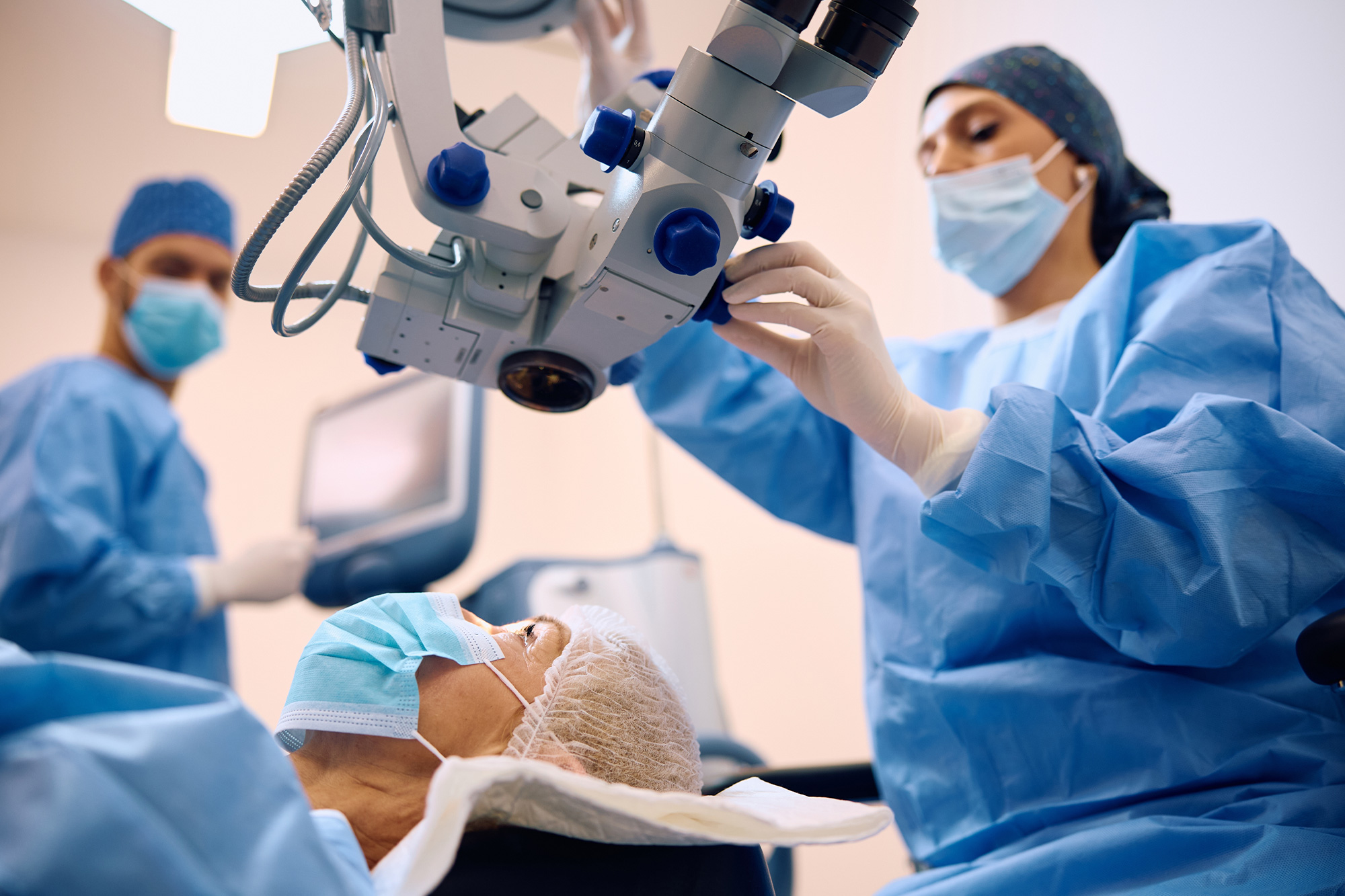
Having cataract surgery on both eyes at the same time is increasing in both popularity and availability. The clinical name for the process is immediate sequential bilateral cataract surgery (ISCBS) and has, until recently, been the exception rather than the norm.
However, with advancing technology substantially reducing the risk factors associated with cataract surgery, the number of people opting to get both eyes “fixed” in a single sitting is increasing.
But… The million-dollar question is… Is it safe?
The Pros and Cons of Dual Eye Surgery
First of all, let’s stress that the procedure is not suitable for everyone. Issues with certain coexisting medical conditions, such as diabetic eye disease or glaucoma, will be taken into consideration. This is where having a great relationship with your ophthalmologist or chosen eye surgeon is worth its weight in gold. Being able to have a frank and honest conversation with your chosen medical professional is essential—and something we at the West Boca Eye Center highly encourage.
Determining whether you might be a candidate for having cataract surgery on both eyes on the same day isn’t a decision to undertake lightly. Because, as with any operation, there are risks. So be absolutely sure that you understand them.
OK, now we’ve got that off our chest, let’s get down to the nitty-gritty of the advantages and disadvantages…
From the patient’s perspective (that’s you), the pros can often outweigh the cons. So, let’s look at these first.
- It’s highly convenient: A single operation means a single visit to the clinic or hospital (follow-up visits notwithstanding). Cataract surgery is a one-time-only solution that uses fast, reliable tech to remove the diseased lenses and replace them with an artificial one, called an intraocular lens (IOL).
- You only have a single recovery period: It typically takes 6-8 weeks for full recovery, so you only need to go through this once.
- Both eyes adjust at the same time: Cataract removal significantly improves vision. When you have one eye done at a time, the in-between period can create a misbalance between visual clarity and significantly different prescriptions in each eye. This can take a bit of getting used to and might mean you need interim eyeglasses until the other eye is operated on and fully recovers.
- It’s less stressful: Let’s face it, no one likes having surgery. Only going through the procedure once halves the anxiety and stress involved.
- It can be cheaper: If you’re paying for some (or all) of your surgery, it can be more cost-effective.
Of course, a balanced view has to also look at the cons of ISCBS:
- The risk of infection in both eyes: While this is very low, it’s not zero. The implications of a bilateral eye infection could, potentially, be extremely inconvenient—or even devastating, depending on how serious it is. This is one of the main reasons that many surgeons don’t yet offer the procedure.
- Logistics during the initial post-operative days: It’s common to have blurry vision, photosensitivity, and some discomfort for the first 24-72 hours. With both eyes affected, this can have a significant effect on how much help you need during this time.
- Sleep issues: Because you can’t lean forward or be in a position where gravity negatively affects the healing process, you’ll need to sleep on your back. Probably not a problem if this is normal for you, but for side sleepers, it might be an issue.
- Less availability: Many cataract surgeons aren’t yet offering the procedure, so it might be more difficult to find a suitable appointment.
- Results of the first eye can’t be taken into consideration: The prescription of the IOL is very precise. Surgeons often use the results of the first operation to “fine-tune” the IOL implanted into the second eye.
However, this last point can, in some situations, be overcome through the use of light-adjustable lenses (IOLS), that can have the prescription altered while in the eye. However, because they’re not suitable for every person and every eye, that’s a whole other subject altogether…
From the cataract surgeon’s perspective, the pros and cons of performing a bilateral procedure is about balancing risk with convenience. For uncomplicated operations—so, no co-existing conditions, mild prescriptions, and relatively “normal” eye anatomy—ISBCS may well be a good, if not preferred, option. Indeed, in such cases, same day cataract recovery can be quicker, because you only need to go through that 6-8 post-op period once.
However, whether or not a same-day option is suitable will be unique to you. The only way to know if ISBCS is appropriate is to discuss it with your cataract surgeon.
Want to find out more? Head to https://www.westbocaeyecenter.com/services/routine-eye-care and call the West Boca Eye Center to book an appointment.
Having cataract surgery on both eyes at the same time is increasing in both popularity and availability. The clinical name for the process is immediate sequential bilateral cataract surgery (ISCBS) and has, until recently, been the exception rather than the norm.
Book an appointment
Fill out the form below and our staff will reach out to you quickly to fully book your appointment and receive all of your necessary information.

Specializing in modern cataract surgery.
Located 1/2 miles North of West Boca Medical Center on Glades Road, directly behind Macy's Furniture Gallery.
West Boca Eye Center
9325 Glades Road, Suite 201.
Boca Raton, FL 33434