


Post Category


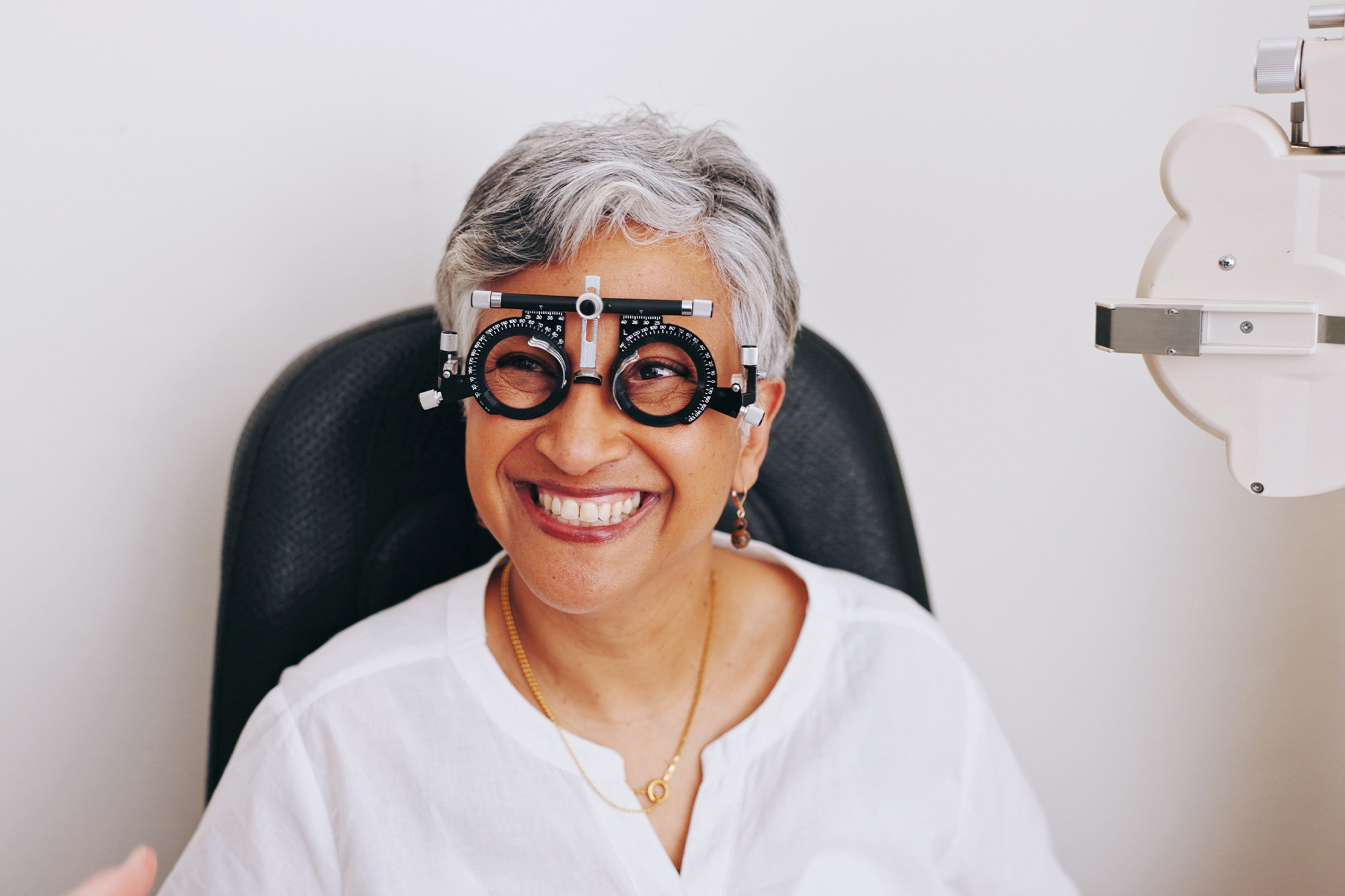
Turning 60 is the new turning 40… But, with a couple of provisos.
Firstly, this is the time of life when giving your physical health, such as strength, flexibility, and movement, really does require consistency. Secondly—and with equal importance—it’s time to turn your attention to additional regular eye checks.
Eye exam frequency for the over 60s should increase to (at least) once a year, as per the senior eye screening guidelines recommended by the American Optometric Association. Of course, if you have co-existing visual or medical conditions that affect your eyesight, then be guided by your ophthalmologist as to even more increased regularity.
Over 60 Eye Checks are All About Preventative Eye Care
One thing that’s a given as you age is that your vision will change. But this doesn’t have to be a negative. Indeed, spotting issues at the earliest stage means that they can be monitored and treatment can be put in place when necessary, which usually mitigates risk and slows or even stops disease progression.
Many eye problems are asymptomatic to begin with. It’s only as they evolve that they tend to cause noticeable problems—by which stage they’re often quite advanced.
While the risk of age-related eye diseases and changes tends to come into play at age 60 and beyond, it’s not a case of boom! Now you’re a “senior” the risk increases. Indeed, once you hit the heady heights of your fourth decade, your eye doctor will already be checking for subtle signs that are indicative of the passing years.
Conditions that become more common with age include:
- Cataracts: Where the eye lens gradually becomes cloudy. This happens over many years—even decades—and requires a routine, low-risk operation when the symptoms become more severe.
- Glaucoma: This is raised pressure within the eye. This can cause compression to the optic nerve and, untreated, can lead to blindness. There are multiple treatment options, including drops, injections, and surgery.
- Age-Related Macular Degeneration (AMD): This affects central vision and reduces your ability to see fine detail and color. It’s managed with injections, laser therapy, visual aids, nutritional supplements, and surgery, in some cases.
- Dry eye: The inability of the eye to produce tears of sufficient quality and quantity to effectively coat the eyeball. While it doesn’t lead to blindness, severe cases can impact day-to-day life. There are many treatment options, ranging from artificial tears and eye drops to light therapy and plugs.
- Diabetic retinopathy: Found in people with diabetes or unstable blood sugar, this affects the blood vessels in the eyes. Treatment includes strict diabetes management, regular eye checks, injections, laser treatments, and other surgical options.
Glaucoma and cataract monitoring, as well as that for AMD and diabetic retinopathy, is the key to prevent accelerated progression and advancing vision loss. But it’s also really important to assess and, if necessary, make strategic lifestyle changes to support your ophthalmologic care.
This includes:
- Achieving and maintaining a healthy weight
- Taking regular cardiovascular exercise (walking, golf, playing with the grandkids… It doesn’t have to be structured, and it all counts)
- Eating a balanced diet that includes plenty of fruit, vegetables, pulses, protein, etc. Steer away from ultra-processed foods and towards food that’s as close to its natural state as possible to ensure a wide variety of essential nutrients.
- Protect your eyes from UV rays with good-quality sunglasses and a peaked hat
- Keep alcohol consumption within recommended levels
- Don’t smoke or vape
Importantly, use any visual aids that your eye doctor prescribes or advises. That means wearing your glasses for reading, driving, or other activities. You might want to take advantage of other technology if your vision is suffering, such as spectacle-mounted magnifiers, video magnification, or hand-held magnifying devices.
Partnering with a great eye doctor is also key. At the West Boca Eye Center, we offer a dedicated senior-centric service for patients aged 60+. From a personalized eye examination schedule to the convenience of every element of eye care in a single location, we lead the way in eye health at every age.
Discover more at https://www.westbocaeyecenter.com/services/routine-eye-care
Adults over 60 should get a comprehensive eye exam at least once a year to catch cataracts, glaucoma, macular degeneration, and other age-related changes early. Learn recommended screening frequency and prevention tips.
Book an appointment
Fill out the form below and our staff will reach out to you quickly to fully book your appointment and receive all of your necessary information.

Specializing in modern cataract surgery.
Located 1/2 miles North of West Boca Medical Center on Glades Road, directly behind Macy's Furniture Gallery.
West Boca Eye Center
9325 Glades Road, Suite 201.
Boca Raton, FL 33434